Montessori Kindergarten: What Happens in the Third Year, and Should Your Child Stay?
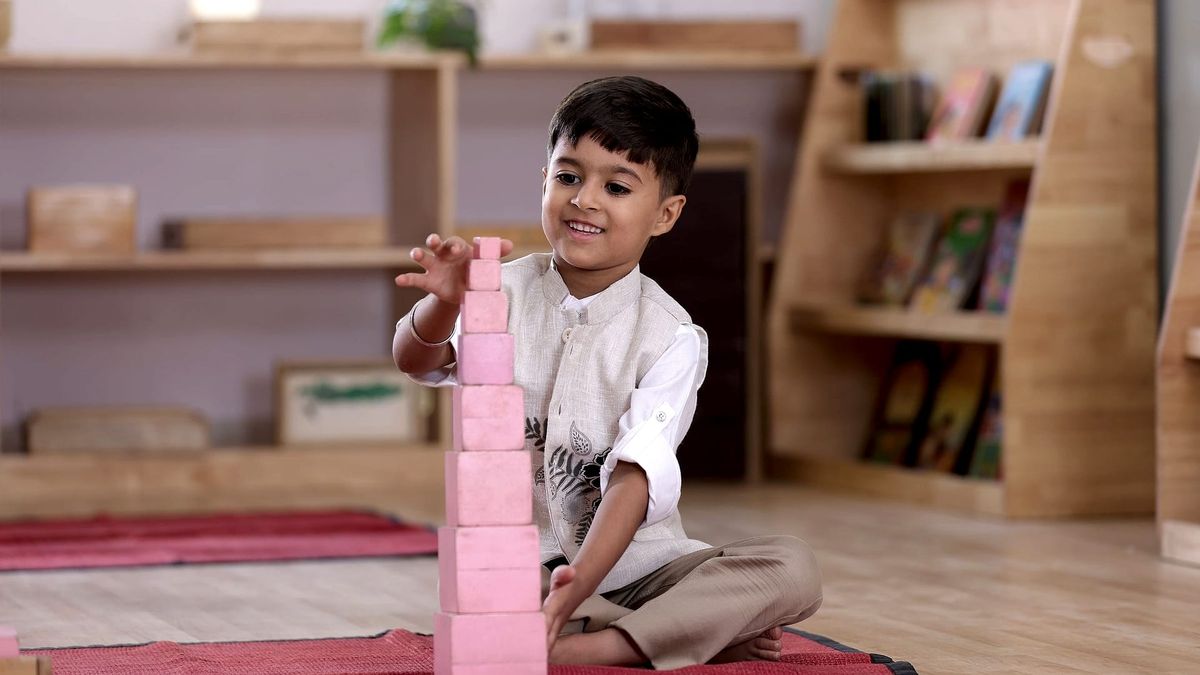
Montessori kindergarten is the third and final year of the Montessori class for ages 3 to 6, when a child of about 5 stays in the same mixed-age room as the oldest member of the group. AMS calls kindergarten “the culmination of the Early Childhood program” (AMS, Early Childhood). In most schools there is no separate kindergarten class. The child stays with the same teacher and many of the same classmates, and takes on more advanced work and more responsibility.
That makes kindergarten a decision point for families. Public kindergarten is an option at five, so many parents weigh a third year of tuition against switching schools. This guide covers what the third year offers, how it compares, and the questions that settle it.
What Is Montessori Kindergarten?
It is the leadership year. AMS writes that in their third year, “often known as Kindergarten”, children “get their turn and take pride in being the oldest”, and that they consolidate their own learning by teaching concepts they have mastered to younger classmates. The class is built around this year. In the first two years children watch the older ones, and in the third they become the ones being watched.
Ages follow each school’s cutoff date. AMS gives the early childhood level as 2.5 to 6 years (AMS glossary), and AMI’s standards give 2.5 or 3 to 6 (AMI/USA standards). A child is usually in the kindergarten year when they would be in public kindergarten in their state. Our guide on what age to start Montessori explains cutoff dates.
What Do Children Learn in Montessori Kindergarten?
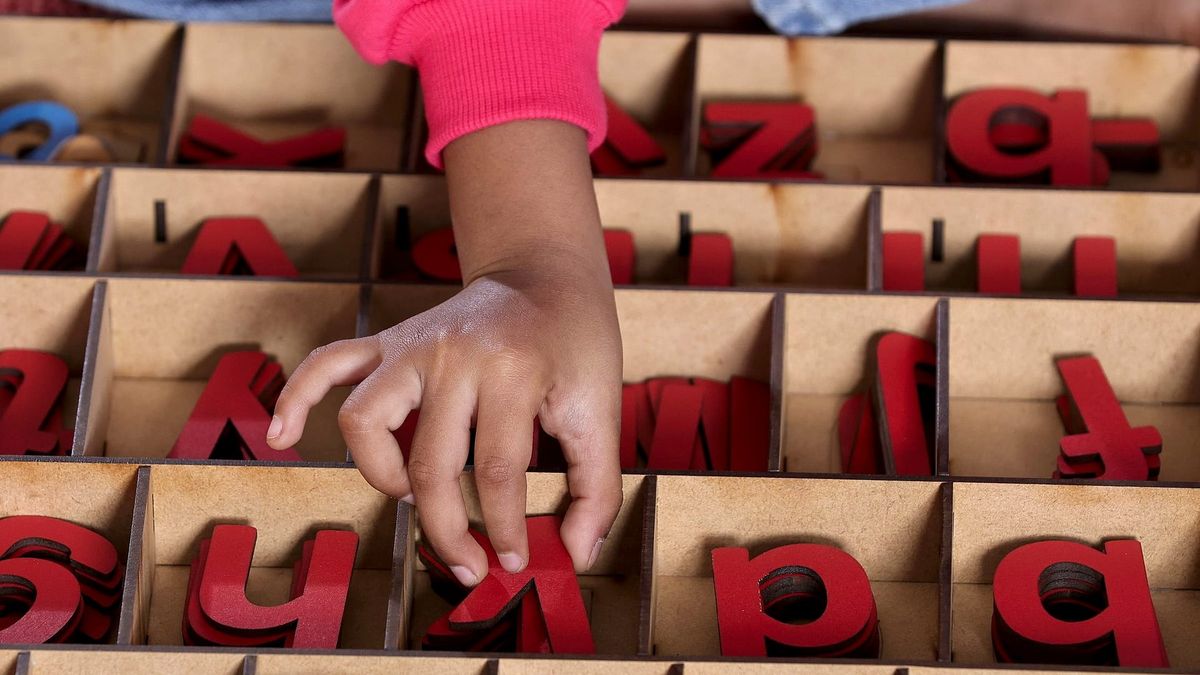
The same five areas as the earlier years, at a higher level. AMS lists “Practical Life, Sensorial, Math, Language, and Cultural Studies” for the early childhood class, and AMI describes language and reading, early math, and studies of geography, history, biology, science, music and the arts (AMI, Montessori 3 to 6).
| Area | What the third year usually adds |
|---|---|
| Language | Writing words and sentences, then reading them, at each child’s pace. See how Montessori teaches reading |
| Math | Larger numbers and place value with concrete materials, then the operations |
| Cultural studies | Longer work in geography, science and nature |
| Practical life | Caring for the room and helping younger children |
| Sensorial | Finer comparisons, and the link from sensory work to geometry |
There is no fixed kindergarten syllabus across Montessori schools. Each child moves through the materials at their own pace, so ask the school what its oldest children were working on by spring. Our Montessori curriculum page follows the areas from preschool into elementary.
Ask the School. Can I watch the oldest children during a morning work period and see what a 5-year-old is working on in reading and math?
How Does Montessori Kindergarten Compare With Public Kindergarten?
| Montessori kindergarten | Public kindergarten | |
|---|---|---|
| Class | The third year of a mixed-age 3 to 6 class | A single grade of children the same age |
| Teacher | The same teacher as the two previous years | A new teacher |
| Day | A long work period with individual and small-group lessons | Mostly whole-class and small-group instruction |
| Pace | Each child moves on when ready | A grade-level curriculum set by the district and state |
| Cost | Tuition at a private school, none at a public Montessori school | No tuition |
| Day length | Set by the school, often a full day | Full day or half day depending on the state and district |
Day length in public kindergarten depends on where you live. In the 2020 federal table built from Education Commission of the States data, 21 states required districts to offer full-day kindergarten and 25 required half-day (NCES, Table 1.3, 2020).
What Does the Research Say About the Third Year?
Research gives part of an answer. In a national study of public Montessori lotteries, children offered a seat at age 3 showed no notable differences from the others after the two preschool years, then came out ahead by the end of kindergarten in reading, short-term memory, theory of mind and executive function (AIR summary, Lillard et al., PNAS, 2025). The gains showed up in the kindergarten year.
The study measured the effect of being offered a place at 3, not of a third year for one child, so it cannot settle your decision on its own. Our guide Is Montessori Worth It? covers its limits and the other studies.
What Does the Third Year Cost?
At a private school, usually a full year of tuition. Of the 92 US schools in our directory that publish a monthly price, half list a lowest rate between $845 and $1,580 a month, and our cost guide shows real fee sheets. Ask whether third-year tuition is the same as the first two and whether full days are required.
Public kindergarten charges no tuition, and so does the kindergarten year at a public Montessori school. Are Montessori schools public or private? explains how to find those programs.
Good to Know. The IRS says “expenses to attend kindergarten or a higher grade aren’t expenses for care” for the child and dependent care credit, though before and after school care for a kindergartner can count (IRS Publication 503). Ask a tax professional how that applies to your bill.
Should My Child Stay for Montessori Kindergarten or Switch?
Stay if your child is doing well in the class, you can pay for a third year when free kindergarten is on offer, and you know where your child will go at six. Switch at five if the tuition matters more to your family, or if the school you want for elementary takes most of its new children at kindergarten.
Answer the first-grade question first. If your Montessori school continues into elementary, staying keeps that path open, and our guide to choosing a Montessori elementary school covers what to look for. If you plan to switch at six, ask the next school how many new children it takes in first grade. Some choice and magnet programs fill most of their seats in the entry year, and a family that waits a year can find them gone.
Think about friends too. Children who start public kindergarten together spend that year forming friendships, and a child who arrives at six joins a class that has had a year to settle. A child who leaves at five gives up the year as one of the oldest in a room they know well. Neither is wrong.
Watch Out. Some states require kindergarten attendance, and in the 2020 federal table the compulsory school age ran from 5 to 8 depending on the state. If you plan to move to public first grade, ask the district whether a kindergarten year at a private school meets your state’s rules and how it places a child coming from one.
What Should I Ask Both Schools?
At the Montessori school, ask what a typical day looks like for third-year children, whether third-year tuition and hours differ from the first two years, whether the school continues past age 6 and gives its own children priority for those places, and where last year’s oldest children went next.
At the next school or district, ask whether it takes new children in first grade and how many places opened last year, how it places a child coming from a private kindergarten, and when first-grade applications open and close.
How Do I Find a Montessori Kindergarten Near Me?
Pick your city on the locations page and filter the list by Kindergarten. In larger cities, a Kindergartens page lists only the schools tagged with a kindergarten year. Set the filter to Elementary to see which schools continue past age 6.
Quick Answers
Is Montessori Kindergarten a Separate Class?
Usually not. It is the third year of the mixed-age 3 to 6 class, with the same teacher. A few schools run a separate kindergarten group, so ask.
Does Montessori Kindergarten Prepare Children for First Grade?
The third year is designed to finish the early childhood program, with the most advanced work in the class. How well the move goes depends on the child and the next school, so ask the first-grade teacher how they welcome children from Montessori.
Is Montessori Kindergarten Worth the Tuition?
It depends on your child, your budget and your plan for age six. The research points to gains that appear by the end of kindergarten, and the cost is a year of tuition when public kindergarten is free.
Find Montessori Schools Near You
Search by city, zip code or school name, or browse every country.
Browse All LocationsRelated Guides
What Is a Montessori School? Meaning, How It Works and How It Differs
What a Montessori school is, what Montessori means, what a Montessori academy is, how a classroom runs, how it differs from a traditional school, programs by age and the trade-offs to weigh before you enroll.
9 min read

How Much Does Montessori School Cost? Real Fees From 92 Schools
What Montessori schools really charge, from the fee pages of 92 schools, plus national figures, the extras that raise the bill and ways to pay less.
8 min read
How to Choose a Montessori School, and Spot One That Isn't Really
Shortlist Montessori schools by age at entry, the daily school run and three priorities, then check training, materials and the work period before you tour.
8 min read