What Is a Montessori Preschool? Inside a Classroom for Ages 3 to 6
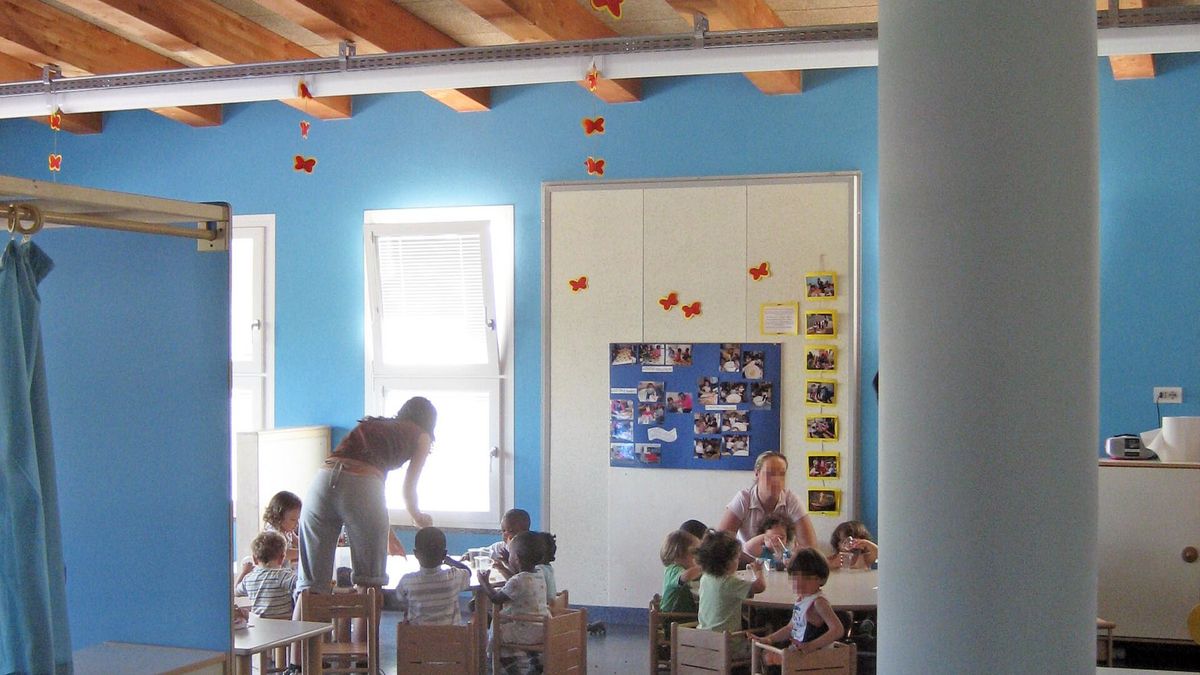
A Montessori preschool is one mixed-age class, usually for children from about 2.5 or 3 to 6, where each child chooses work from open shelves and a trained teacher gives short lessons to one child or a small group at a time. Children normally stay in the same room for three years, and the last of them is the kindergarten year. Schools call the class Children’s House, Casa, primary or early childhood (AMS glossary).
How Big Is the Class, and Who Teaches It?
AMI’s standards describe a primary class of 24 to 35 children with one teacher who holds an AMI diploma for the 3 to 6 level, plus one non-teaching assistant who makes materials, notes observations and supervises outdoor time (AMI/USA standards, read November 2026). AMS recognizes teacher credentials from AMS, AMI and accredited Montessori training programs.
The large group is by design, since older children teach younger ones. In a 2025 national study of public Montessori preschools, the classrooms that 3-year-olds joined had up to 13 children per adult, a higher ratio than in the traditional classes they were compared with (Lillard et al., PNAS, 2025).
Your state’s licensing rules set the legal limit on children per adult. Ask how many children and adults are in the room on an ordinary morning.
What Happens During the Morning?
Most of the morning is one long work period. AMI’s standards ask for three uninterrupted hours on five mornings a week and two more hours on five afternoons. AMS sets a minimum of two hours a day on four days, and calls three hours on five days optimal (AMS).
Within that block, AMS describes a cycle in which a child chooses an activity, works with it for as long as it holds her interest, cleans up, returns it to the shelf and chooses again. The teacher moves around the room, gives lessons to one or two children, and keeps notes on who is ready for what. Our guide to what a Montessori school is follows one illustrative child through a full morning.
What Are the Areas of the Classroom?
AMS lists five areas of study for this age (AMS, Early Childhood).
- Practical life, such as getting dressed, preparing snacks, setting the table and caring for plants, along with please and thank you
- Sensorial work, where materials like the pink tower, ten cubes that differ only in size, sharpen what a child notices
- Math, from matching numerals to quantities up to the golden beads for place value
- Language, where writing is taught first and reading follows, covered in our guide to how Montessori teaches reading
- Cultural studies, which folds in geography, history, science, art and music
AMI groups the materials in much the same way, with spoken language, writing and reading as one area (AMI, Montessori 3 to 6). Our primary program page describes each year, and the materials guide shows what sits on the shelves.
What Do the Oldest Children Do?
They become the people the younger children watch. AMS writes that children in the third year consolidate their own learning by teaching concepts they have already mastered to other children, while moving on to more advanced materials themselves. AMI’s standards page quotes Maria Montessori on why it works, writing that there are many things “which no teacher can convey to a child of three, but a child of five can do it with the utmost ease.”
For a family, the third year is a decision. The class is built to finish with it, and it is often the kindergarten year, when free public kindergarten is the alternative. Our guide on what age to start Montessori explains how the third year lines up with state cutoff dates.
Ask the School. How many children in this class are in their first, second and third year right now? A class with almost no 5-year-olds has few older models for your child.
Half Day or Full Day?
A class built to AMI’s standards runs a full school day, since they describe both a morning and an afternoon work period. AMS’s minimum of two hours on four days leaves schools room to offer shorter programs.
If a school offers mornings only, ask what your child would miss in the afternoon and whether a half-day place can become a full day later. If you need full days, ask where younger children rest after lunch and what the oldest children do while they sleep.
Check the hours of the class itself against the hours of paid care, because a school that is open until 6 p.m. may end class much earlier. Our guide on Montessori for working parents covers early drop-off, aftercare and closed weeks.
Tip. Ask for the daily schedule and find the longest stretch between arrival and lunch with no circle time, special class or transition. That is the real work period, and AMI’s standard is three hours.
What Should I Look for on a Visit?
Go on a weekday morning during the work period and stay at least half an hour. Watch for these.
- Children of visibly different ages working in the same room
- An older child showing something to a younger one, or a younger child watching closely
- The teacher sitting with one child or a small group while everyone else keeps working
- Shelves covering all five areas, with materials complete and in good repair
- Children putting work back on the shelf before choosing the next thing
- An adult noticing a child who is wandering and helping them find something to do
- Oldest children doing longer work, such as writing words or big additions with beads
Our tour checklist has questions for every age. If your child is close to the age line, choosing between infant, toddler and preschool helps you pick the room to visit.
To find classes near you, pick your city in find Montessori schools near you, filter the list by Preschool, and confirm the age range with each school.
Find Montessori Schools Near You
Search by city, zip code or school name, or browse every country.
Browse All LocationsRelated Guides
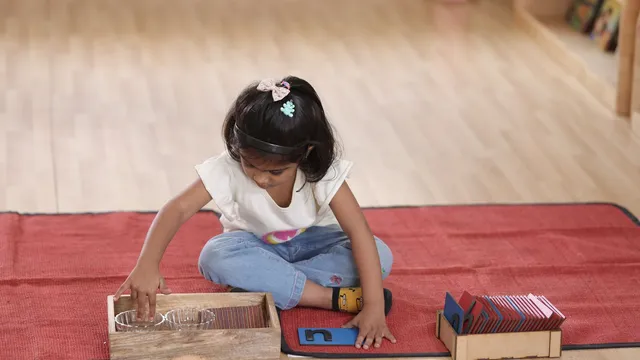
What Is a Montessori School? A Morning in the Classroom, Explained
What a Montessori school is, told through one illustrative morning, with mixed ages, the guide, the materials, programs by age and honest trade-offs.
6 min read

How Much Does Montessori School Cost Once You Add Fees and Aftercare?
Build a real Montessori budget from tuition, fees, meals, aftercare and closed weeks, with dated national figures, tax help and questions for the school.
6 min read

How to Choose a Montessori School Before You Book a Tour
Narrow a Montessori shortlist before touring, using your child's age at entry, an ordinary weekday school run, your top priorities and what listings show.
5 min read